
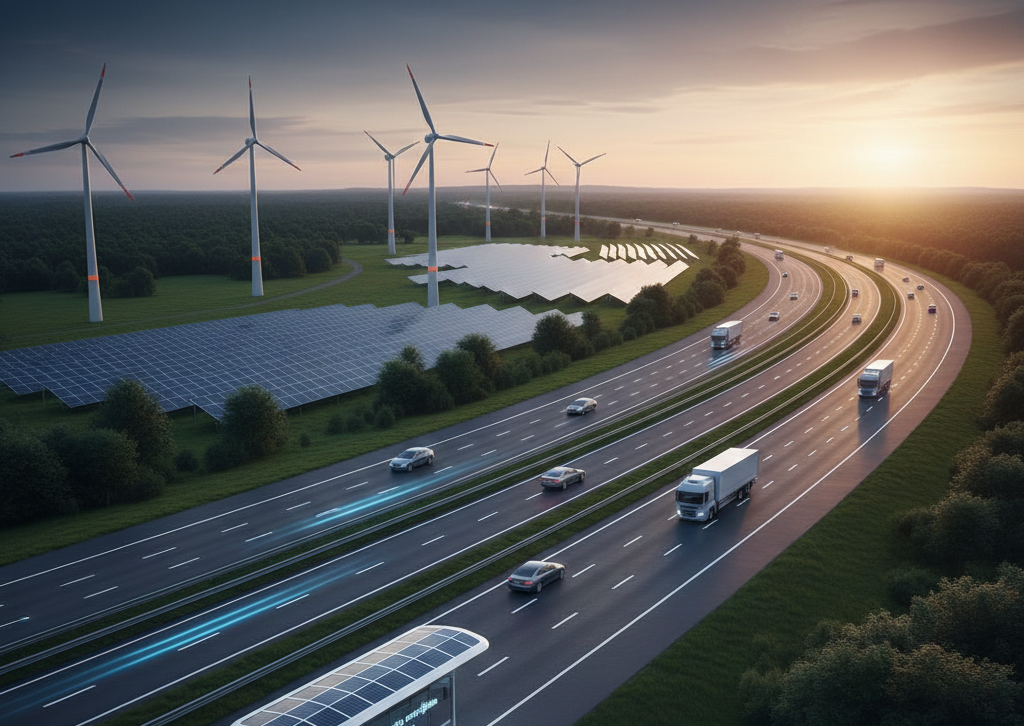
While we are already used to seeing many electric cars on the streets, zero-emission trucks are still a rarity. However, a movement has begun in this transport segment as well, and the business sector is waiting for concrete support from the government and the European Commission.
Zero-emission heavy-duty vehicles currently account for only 3.5% of new registrations in the European Union.
One of the keys is a comprehensive approach – overcoming all the barriers that hinder the expansion of zero-emission trucks. This means that European institutions need to find additional funding to make electric trucks (HDVs) affordable for freight transport companies. However, this is only one of the supporting elements that must be complemented by several others – ensuring sufficient grid capacity, connections along motorways, affordable charger installation and energy costs.
Carriers emphasize that until this system is significantly improved, the use of electric heavy vehicles will not be sufficient to meet Europe’s climate goals.
Market growth is needed
The European Automobile Manufacturers Association (ACEA) is a major lobbying body in Europe, demanding greater political support for the transition to electrified trucks. ACEA represents European truck manufacturers, including market leaders Scania, DAF, Daimler, Iveco and other major players in the industry. This community of manufacturers is also joined by Chinese manufacturers such as Foton, which have successfully started to conquer the European market.
In March 2025, the European Commission published a document that is one of the steps towards sustainable mobility. A new EU policy was presented – the “Automotive Action Plan”, which aims to systematically help the automotive sector to modernise. This was welcomed by Thomas Fabian, Head of Commercial Vehicles at ACEA, who stressed that the action plan particularly highlights heavy-duty vehicles. He recalled that the commercial vehicle sector is fundamentally different from the passenger car segment, which is why it needs special support.
Worldwide delivery
The need for comprehensive support is also emphasized by M. Kurban, head of the DHL Group’s Brussels corporate office. DHL is a global delivery giant that has not been able to rely on Europe’s electrical infrastructure to deploy a large number of electric HDVs so far. He points out that DHL’s fleet worldwide has about 120,000 vehicles, of which only about 25 are electric. The company expects more favorable conditions – sufficient network capacity, accessible connections, reasonable energy and charger costs.
There are currently around 600 public heavy-duty truck chargers in Europe, but the industry believes that their number needs to increase to at least 35,000 by 2030 to meet EU emissions reduction targets.
Important question
These challenges are compounded by other, less obvious obstacles, such as the update of the EU Weights and Dimensions Directive, which would allow battery-powered HDVs to carry the same payload as fossil-fuel vehicles. Unfortunately, the adoption of this directive is stuck in the complex and lengthy legislative processes in Brussels.
Trucks account for around 25% of CO₂ emissions on EU roads, making this segment crucial to achieving Europe’s emissions reduction targets. The race is on to make zero-emission heavy-duty vehicles not only technically possible but also economically viable in Europe.