
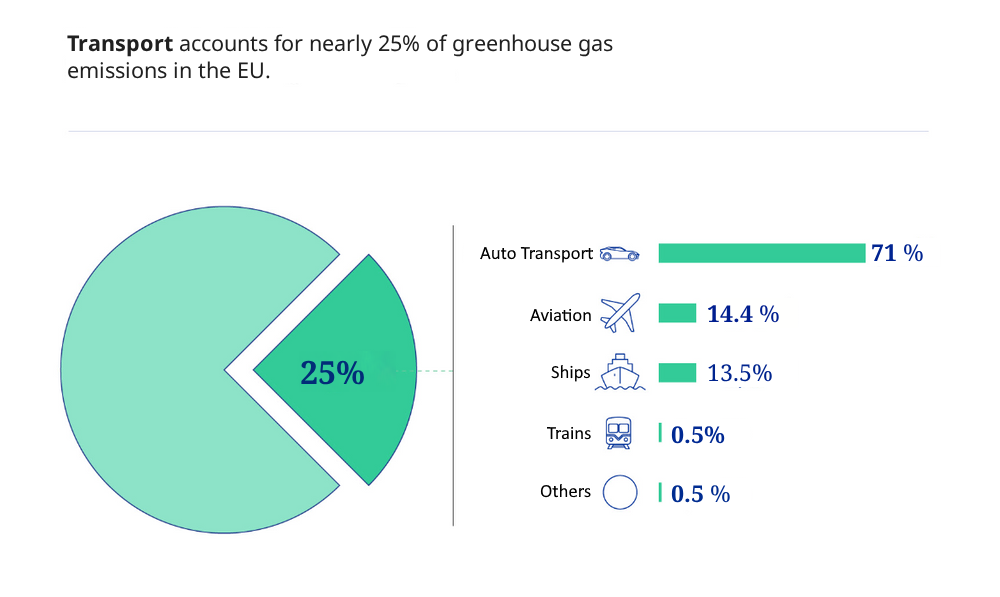
Europe is moving rapidly toward reducing emissions in the transportation sector. Significant progress has been made in recent months, and amendments to various directives and regulations have been approved that will bring about major structural changes in both national vehicle fleets and the energy mix for transportation. Changes are expected in both the passenger and freight vehicle segments.
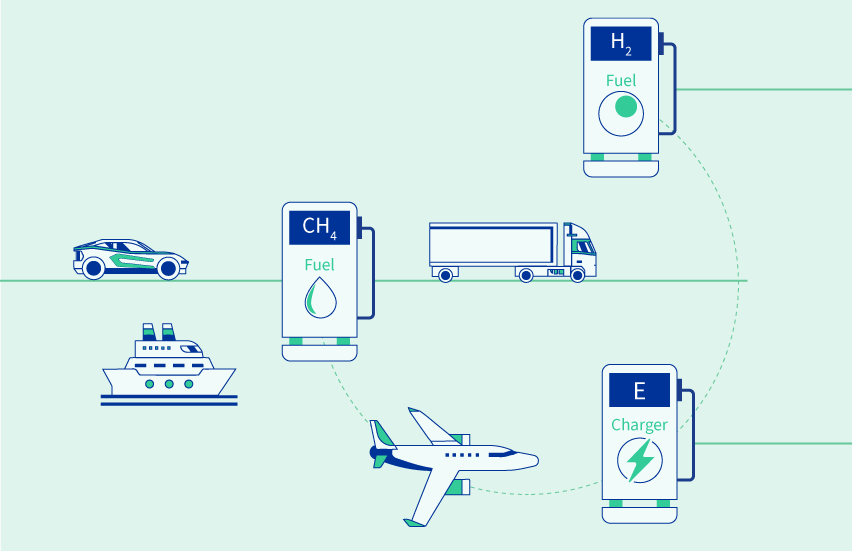
Photo: https://www.consilium.europa.eu/
Alternative Fuels Infrastructure Regulation (AFIR): a new piece of legislation aimed at increasing the number of charging and refueling stations across Europe
The regulation sets out specific implementation targets to be achieved by 2025 or 2030, in particular:
- Starting in 2025, fast-charging stations with a capacity of at least 150 kW for passenger cars and vans must be installed every 60 km along the EU’s main transport corridors, or the so-called Trans-European Transport Network (TEN-T);
- Starting in 2025, charging stations with a minimum capacity of 350 kW for heavy-duty vehicles must be installed every 60 km on the TEN-T core network and every 100 km on the larger, comprehensive TEN-T network, achieving full network coverage by 2030;
- Starting in 2030, hydrogen refueling stations for both passenger cars and trucks must be installed at all urban hubs and every 200 km along the TEN-T core network;
- seaports that handle a minimum number of large passenger ships or container ships must provide shore power for such vessels by 2030;
- Airports must provide electricity to parked aircraft: by 2025 at all boarding gates, and by 2030 at all remote parking stands.
Read More: https://shorturl.at/arwE4
Renewable Energy Directive (RED III): Raises the renewable energy target for the transportation sector.
RED III raises the renewable energy target for transportation from 14% to 29%. As in the previous version of the Renewable Energy Directive, the responsibility for meeting the renewable energy target must be assumed by fuel suppliers designated by the state.
Starting in 2025, RED III sets a specific combined sub-target (of 1%) for so-called advanced biofuels and transport fuels of non-biological origin derived from renewable energy sources (RFNBO), such as hydrogen and e-fuels. By 2030, their share must reach 5.5%, of which at least 1% must be RFNBO. RED III also stipulates that biomethane injected into the national gas transmission and distribution infrastructure may be counted toward meeting this sub-target.
Similarly, part of the target can be met by using crop-based biofuels, the consumption of which can be increased to slightly above the 2020 consumption level. Furthermore, unlike previous versions of the directive, RED III provides for a compensation mechanism for operators of both public and private electric vehicle charging networks, stipulating that they may receive exchange credits for the renewable electricity supplied for transportation.
Read More: https://shorturl.at/kluL5
The “FuelEU Maritime” Initiative: A New Regulation to Decarbonize the Maritime Sector.
The new regulation includes the following key provisions:
- Ship operators must use biofuels, biomethane, and RFNBO to ensure that the GHG emission intensity of fuels used in the maritime sector gradually decreases over time by 2% in 2025, by 14.5% by 2030, and up to 80% by 2050;
- a special incentive scheme aimed at supporting the introduction of so-called renewable fuels of non-biological origin (RFNBO) with high decarbonization potential;
- a requirement for passenger ships and container ships, when berthed at major EU ports, to use shore-side electricity for all their electricity needs starting in 2030, in order to reduce air pollution in ports, which are often located near densely populated areas;
- Revenue generated as a result of the regulation’s implementation (“FuelEU” fines) should be used for projects that support the decarbonization of the maritime sector.
Read More: https://shorturl.at/ghvxB
The “ReFuelEU Aviation” Initiative: A New Regulation to Decarbonize the Aviation Sector
The ReFuelEU Aviation regulation stipulates that jet fuel used in aircraft must henceforth be blended with sustainable aviation fuel (SAF), which reduces CO2 emissions. Aviation fuel suppliers will be required to ensure that all fuel available to aircraft operators at EU airports contains a minimum percentage of SAF starting in 2025 and a minimum percentage of synthetic fuel starting in 2030, with both percentages gradually increasing through 2050. Under the final agreement, the percentage of SAF to be blended with jet fuel will start at 2% by 2025, rising to 6% by 2030, 20% by 2035, 34% by 2040, and 70% by 2050. ReFuelEU applies only to commercial air transport flights. Compliance is mandatory for airports where passenger traffic exceeds 800,000 passengers or cargo traffic exceeds 100,000 metric tons during the previous reporting period.

Read More: https://shorturl.at/hEPY9