
The local government acting as a coordinator between institutions and businesses, the restructuring of personal income tax, and greater responsibility for planning regions would be effective tools for stimulating business activity, attracting investment, and fostering the growth of the capital region as a whole, according to participants in the discussion “Development Priorities for the Riga Metropolitan Area with Regard to Entrepreneurship.”
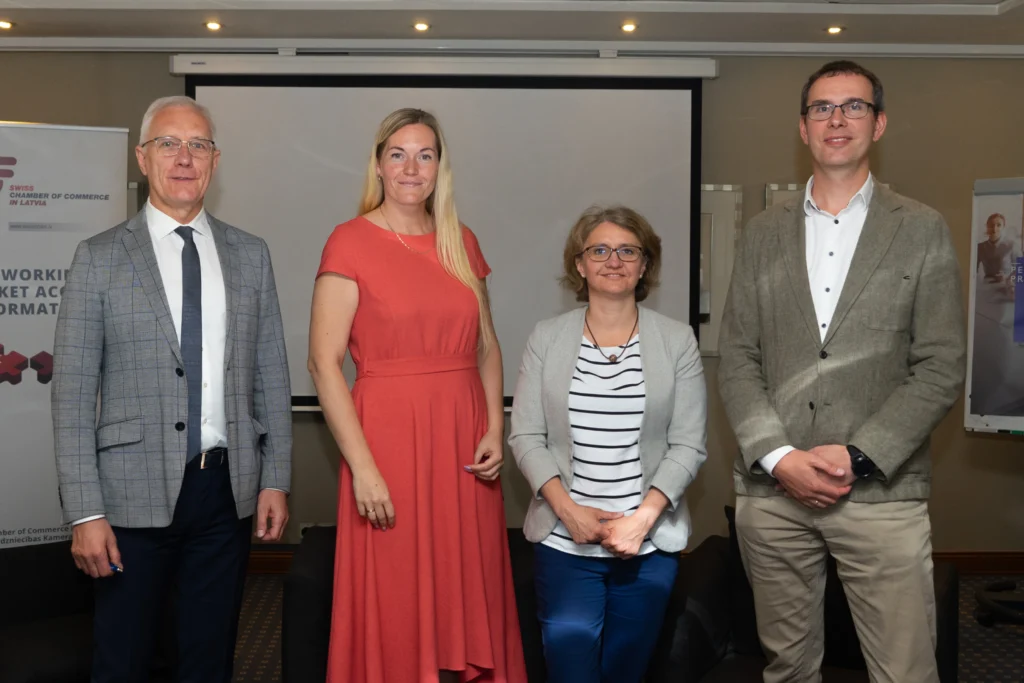
“Companies from various sectors would like to see much more decisive action from Riga, the Pieriga region, and national institutions to promote economic development. The perception that national institutions are holding things back may be misleading, but that is the view held by the business community. We urge the local governments of Riga and the Pieriga region to advocate much more actively and radically for funding their region’s development, both in terms of attracting European Union funds and restructuring personal income tax and other taxes. “At present, businesses in Riga and the surrounding region feel, at least in part, somewhat neglected, and this is not good for the capital’s metropolitan area as the main engine of Latvia’s economy,” noted the discussion moderator, Armands Gūtmanis, director of the consulting firm “Meta Advisory.”
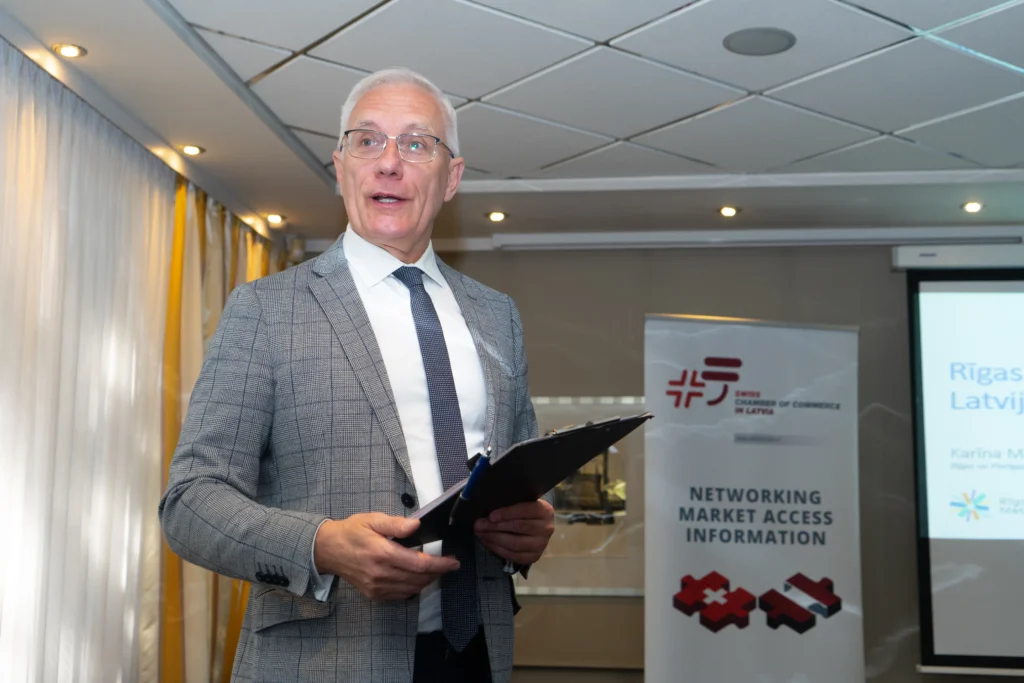
To promote economic development not only in Riga and the surrounding area but also in other regions of Latvia, it would be beneficial to develop a model of cooperation between local governments and businesses, in which the local government ensures the coordination of the actions of the parties involved, thereby accelerating the coordination process with various state institutions, thereby facilitating faster investment attraction and development.
Andis Kublačovs, Project Director at the real estate development company “Linstow Baltic,” emphasized that new solutions are needed to promote project development: “Our proposal is that the municipality could act as a coordinator, issuing a building permit to itself, while private partners would provide the funding, with the municipality itself financing only a portion. In such projects—which are of interest to both businesses and local governments, such as the improvement of access roads—properties owned by various owners are often involved, and a number of other issues must also be addressed. There are already several positive examples in Latvia where the municipality acts as a coordinator, but this model of cooperation has not yet been formally adopted. The municipality could serve as a coordinator, ensuring that all private partners fulfill their obligations and that no disputes arise. Therefore, it would be important to also consider the regulatory framework for such a model.”
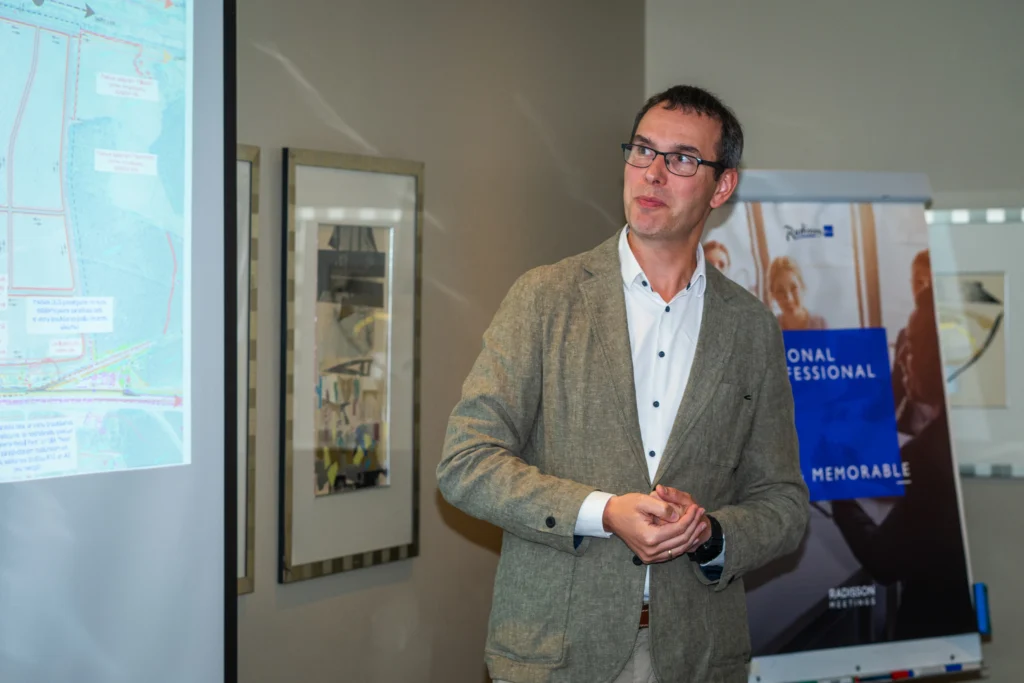
Participants in the discussion reviewed a proposal to restructure the personal income tax in order to increase local governments’ incentive to support and promote job creation within their territories. “Riga’s needs, including infrastructure for business development, far exceed its resources, so we are seeking various sources of funding. Redistributing personal income tax would be one fair way to increase the city’s budget and secure funding to address these issues, as there are a great many residents who live outside Riga but work in Riga. “That is why we support this tax redistribution reform,” explained Inese Andersone, Chair of the Riga City Council’s Urban Development Committee.
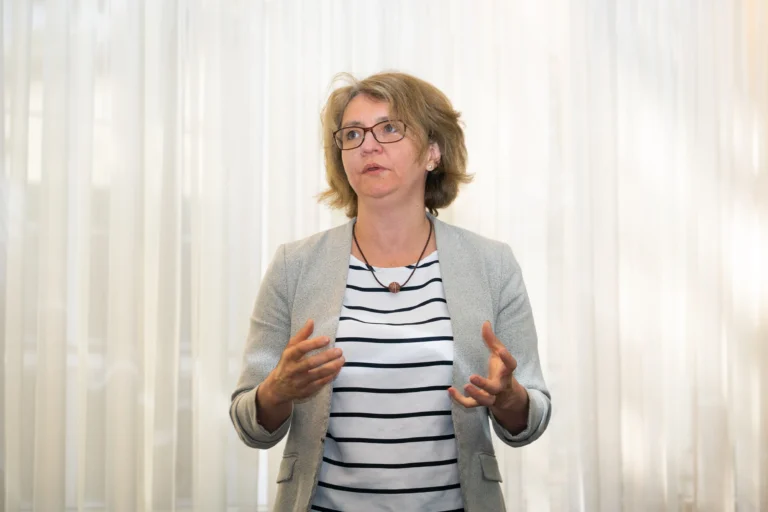
One of the conclusions of the discussion was that the planning regions established in Latvia—which are functioning well—should be structured as institutions responsible for business and development planning not just within the boundaries of a single, relatively small municipality, but on a broader scale.
Andris Miglavs, advisor to the Minister of Environmental Protection and Regional Development on regional development and economic issues, explained that the development of the Riga region must be based on three pillars: cooperation, planning, and financial management. Only then will it be possible to keep pace with the capital regions of both Baltic neighboring countries in terms of development and population growth. “Cooperation is necessary because no municipality in Latvia is capable of solving its own challenges by working in isolation. That is why planning regions have been established, and the position of the Ministry of Environmental Protection and Regional Development is clear and unwavering: planning, whether we’re talking about business development, education, or mobility, must be carried out not at the level of a single municipality, but within the framework of a planning region,” emphasized the ministry representative.
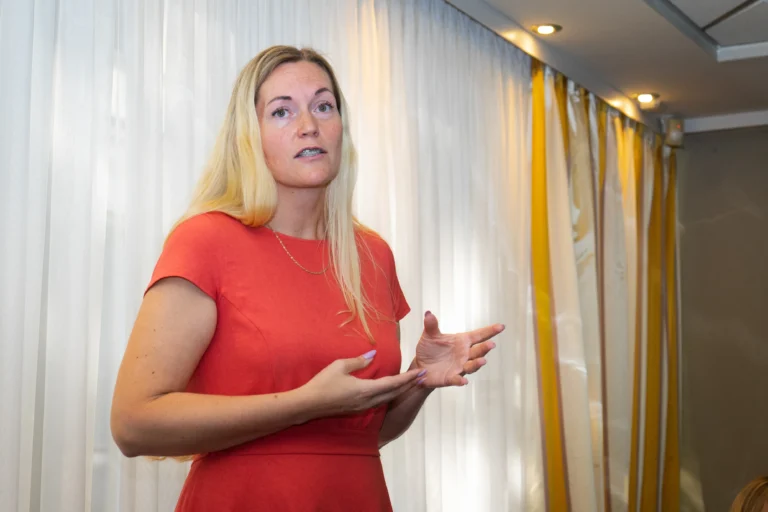
Karīna Miķelsone, co-chair of the board of the association “Rīgas metropole” and chair of the Ādaži Municipal Council, emphasized that the capital and its surrounding region are home to significant potential, which is an essential prerequisite for investment and development. In a relatively small portion of the country’s territory—about 5.6% of Latvia’s total area—60% of the country’s companies operate, 85% of the total number of students attend universities and colleges, and 90% of research institutions are located. The interconnection of these factors can bring about significant qualitative changes.
The discussion “Development Priorities for the Riga Metropolitan Area with Regard to Business” was organized by the consulting firm “Meta Advisory,” the Irish-Latvian Chamber of Commerce, and the Swiss Chamber of Commerce, in cooperation with the Latvian Association of Spatial Planners and the company “Linstow Baltic.”