
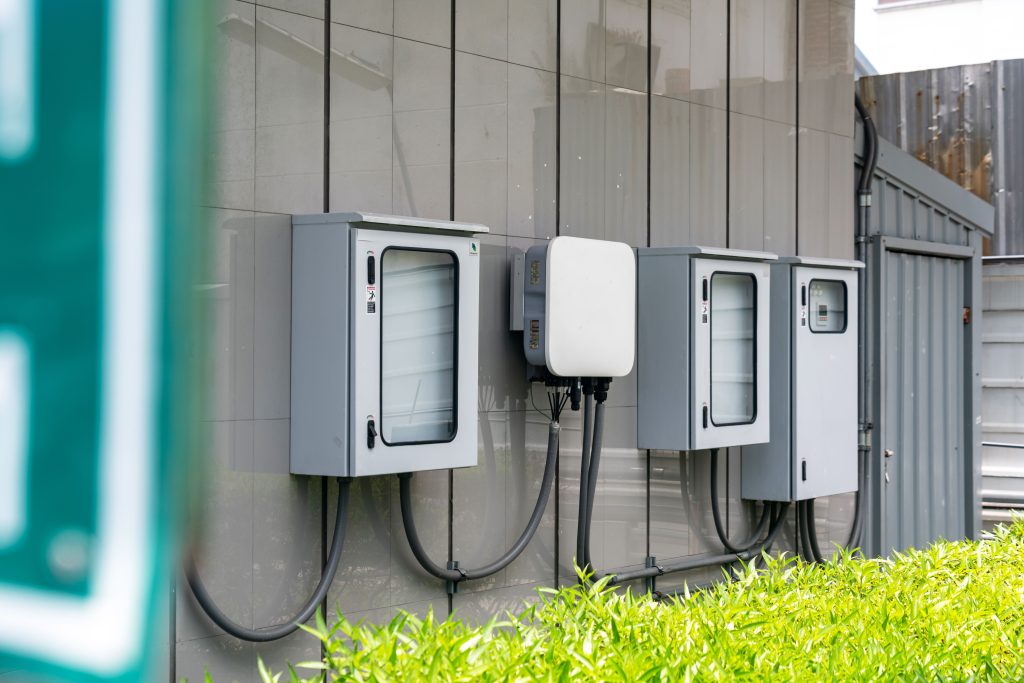
Energy storage is becoming an increasingly important component of electricity infrastructure. As renewable energy generation continues to expand, the need for solutions that enable electricity to be stored and used when supply and demand do not coincide is growing. One of the most significant technological developments in this area is the advancement of higher-capacity battery cells.
Amber Advisory monitors technological developments and investment trends in the energy sector that influence infrastructure development and create opportunities for new projects. Advances in battery technology are particularly relevant for Latvia, where the importance of a flexible electricity system has increased following the synchronisation of the Baltic electricity grids with continental Europe.
Higher-Capacity Battery Cells – More Efficient Energy Storage Systems
According to the industry publication PVTIME in its October 2026 overview, battery manufacturers are increasingly focusing on ultra-large-capacity cells to reduce the costs of energy storage systems and simplify their overall design.
Traditionally, large-scale energy storage systems consist of numerous individual battery cells connected into modules and racks. Increasing the capacity of individual cells makes it possible to reduce the number of cells and electrical connections required. This can lower installation workload, reduce the number of potential failure points and simplify the overall system architecture.
These developments are particularly significant for large-scale energy storage projects, where even a relatively small reduction in costs per unit of installed capacity or stored energy can have a considerable impact on total investment requirements.
At the same time, higher cell capacity alone does not guarantee lower overall costs or improved system performance. Cooling systems, safety mechanisms, operational lifespan, certification and actual performance under operating conditions remain equally important considerations.
Chinese Manufacturers Take the Lead
Data compiled by PVTIME indicates that Chinese companies currently dominate the ultra-large-capacity battery cell segment for stationary energy storage applications.
Examples highlighted in the article include:
- BYD – a 2,710 Ah Blade Battery cell designed for energy storage applications and used in the company’s Haohan energy storage system.
- HiTHIUM – a 1,300 Ah cell developed for large-scale energy storage projects.
- EVE Energy – a 702 Ah cell.
- REPT BATTERY, CORNEX and Gotion High-Tech – solutions in the 688 Ah capacity class.
Meanwhile, publicly available stationary energy storage solutions offered by several other international manufacturers still feature lower nominal capacities. This difference also reflects manufacturers’ strategic priorities. In recent years, Chinese companies have placed particular emphasis on stationary energy storage, while some other manufacturers continue to direct a significant share of their research and development resources towards electric vehicle batteries.
Nevertheless, market development will be determined by more than technological specifications alone. Manufacturing capacity, supply chain security, product quality, safety requirements and the ability to deploy technologies across different international markets will all play an important role.
What Does Higher Capacity Mean for Energy Storage Project Developers?
Higher-capacity cells can offer several advantages for companies planning, financing and implementing battery energy storage system (BESS) projects.
1. Potential to reduce system costs.
A smaller number of cells and electrical connections can simplify equipment assembly and installation. However, total project costs also depend on inverters, cooling systems, fire protection, grid connections and other infrastructure components.
2. More efficient use of space and infrastructure.
A more compact system design can simplify the placement of energy storage equipment and potentially reduce the amount of supporting infrastructure required.
3. Improved project economics.
If technological improvements reduce total investment and operating costs, projects may become more commercially competitive. The final outcome, however, depends on electricity price fluctuations, market revenues, financing conditions and battery cycle life.
4. New technical and supply chain risks.
Larger cells also introduce additional requirements for system design and validation. Before selecting a technology, developers must assess its safety, operational stability, warranty conditions, supplier reliability and long-term servicing capabilities.
Therefore, energy storage project developers should evaluate not only the nominal capacity of individual battery cells but also the performance and economics of the entire system.
Energy Storage Is Becoming Increasingly Important in Latvia
These technological developments are particularly relevant for Latvia. As solar and wind generation capacity continues to grow, the energy system requires greater flexibility to balance electricity generation and consumption and make more efficient use of the electricity produced.
In February 2025, the Baltic states synchronised their electricity grids with the continental European power system. In this context, local balancing and flexibility infrastructure is becoming increasingly important, with battery energy storage systems potentially playing a significant role. Several projects of this kind are already under development in Latvia.
For example, in February 2026, a project in Grobiņa Parish was announced, where NGEN plans to develop a grid-connected battery energy storage system with a power capacity of 100 MW and an energy storage capacity of up to 200 MWh. Commercial operations are scheduled to begin towards the end of 2026.
Meanwhile, in April 2026, Sunly and Rolls-Royce Power Systems announced agreements for the construction of four large-scale battery energy storage systems in Latvia, with a combined storage capacity of 490 MWh. The first hybrid energy park combining solar generation and battery storage, located in Valmiera, is scheduled to become operational in 2027.
These projects demonstrate that energy storage in Latvia is gradually evolving from individual technological solutions into an important direction for the development of the country’s energy infrastructure.
Key Considerations When Selecting Technology and Planning Investments
The introduction of higher-capacity battery cells creates new opportunities, but investment decisions must be based on thorough technical and economic assessments.
Project developers and investors should pay particular attention to the following factors:
- Technology suitability – whether the selected solution meets the required power capacity, storage duration and intended operating profile.
- Total lifecycle costs – not only the initial equipment purchase price but also operating, maintenance, replacement and disposal costs.
- Safety and certification – fire protection solutions, thermal management and compliance with applicable regulatory requirements.
- Supply chain resilience – the manufacturer’s financial stability, delivery reliability, warranty conditions and availability of spare parts.
- Project revenue models – opportunities to participate in electricity markets, provide balancing services and benefit from electricity price fluctuations, while accounting for associated market risks.
Conclusions
The development of higher-capacity battery cells represents a significant transformation in the global energy storage industry. These technologies have the potential to reduce system costs, simplify equipment design and support the development of large-scale energy storage projects.
At the same time, technology selection will increasingly depend not only on nominal specifications but also on safety, total system costs, supply chain resilience and long-term operational performance.
In Latvia, as renewable energy projects continue to expand and the need for a more flexible electricity system increases, energy storage is becoming an important area for investment and infrastructure development. The next step will involve not only installing additional capacity but also integrating technologically advanced and economically viable solutions into the energy system.
Sources