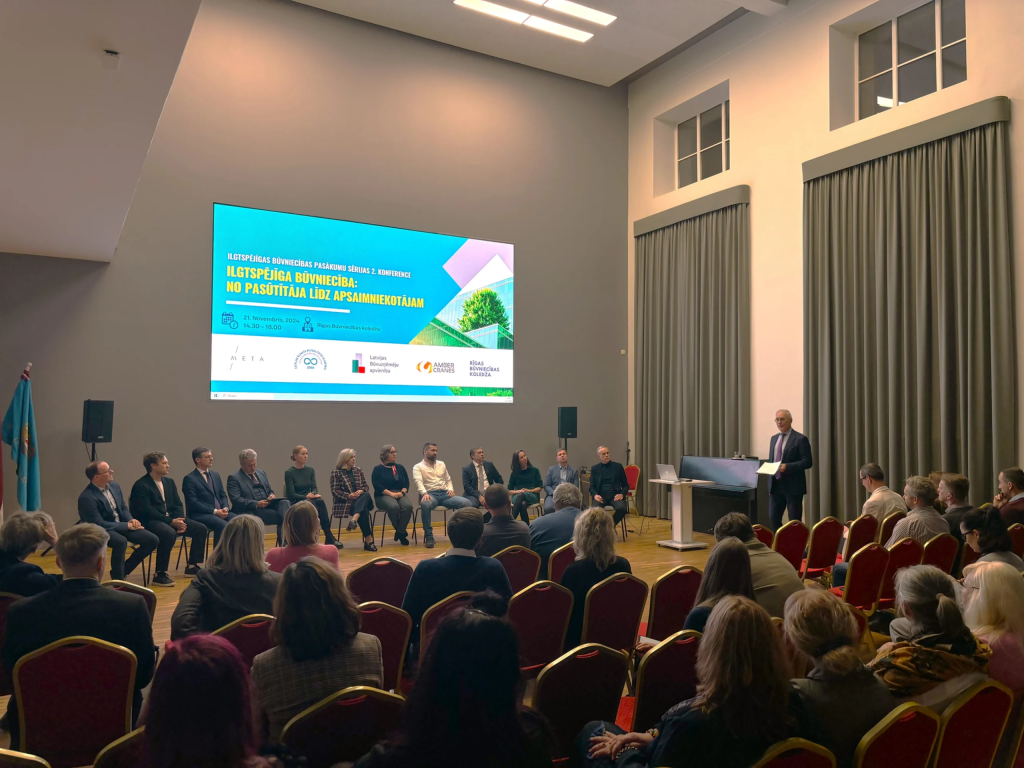
Amendments to the Public Procurement Law are vital for the implementation of sustainable construction
Sustainable construction and the transformation of the building stock to climate neutrality is one of the most complex challenges in both Latvia and the European Union. Experts in the discussion point out the significant impact of the sector on greenhouse gas emissions and energy consumption, emphasizing the need for radical changes to achieve emission reduction goals.
The requirements for measuring and disclosing the life cycle carbon content of buildings, which will soon come into force in Latvia, are a significant step towards more transparent and sustainable construction. Armands Gūtmanis, Head of the Climate Neutrality Cluster, emphasizes that “the European Union is currently working on the detailing of the 2040 climate targets, which envisage a 90% reduction in emissions. To achieve this, we still have an interim target for 2030 – a 55% reduction in emissions, which will affect construction-related sectors as one of the largest sources of emissions.”
Experts point out that one of the priority tasks in the overall planning work of all sectors would be to determine so-called threshold values, namely how much CO2 per square meter should be allowed in new buildings.
“Cooperation and coordinated action of all sectors involved in sustainable construction is a fundamentally important prerequisite for implementing the new European regulations on sustainable construction. Together with business representatives, we will continue the implementation of more structured sustainable construction principles next year, dividing this large topic into more specific topics and involving state and local government institutions and educational institutions,” says Gūtmanis.
“Sustainable construction is an approach that simultaneously takes into account economic, social and environmental aspects. It must ensure the sustainability of buildings throughout their entire life cycle,” explains Valdis Ligers, an expert at Baltic Sustainable Building Advisors.
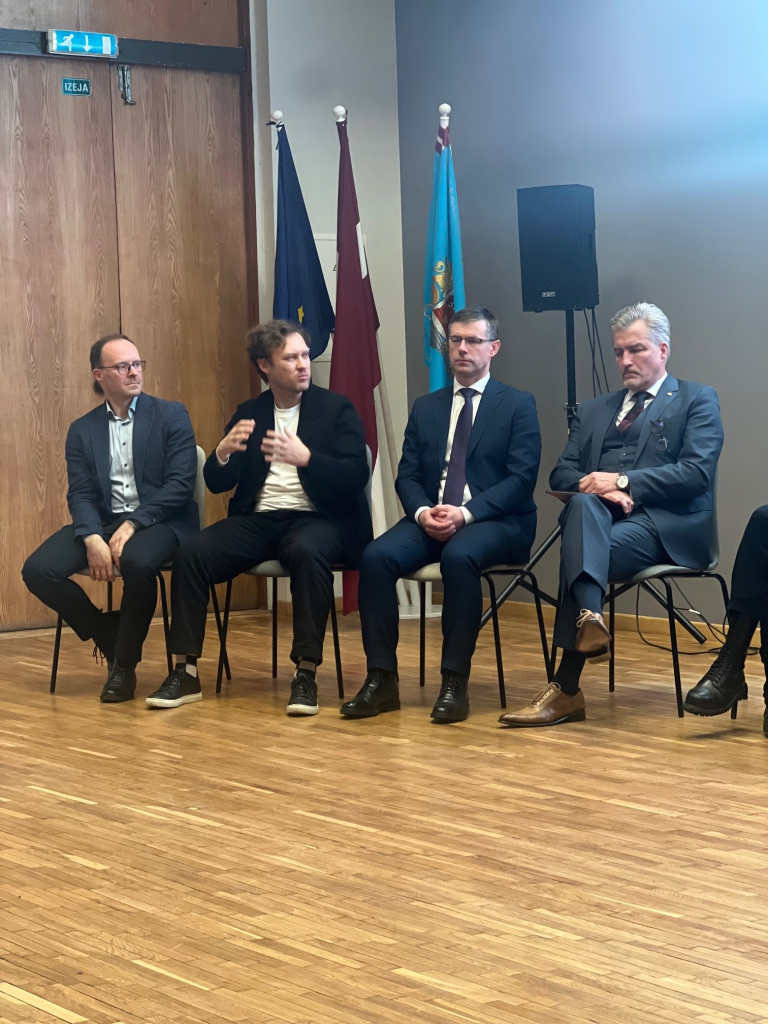
Liger refutes the most common myths – cost and inability to “measure”, namely, he emphasizes that building sustainable buildings is not expensive, and their sustainability can be accurately measured using specialized systems. “The main challenge is collecting and compiling the necessary data,” Liger adds.
“Riga City Council manages more than 12 thousand apartment buildings, which are in very different conditions – from new projects to dilapidated buildings,” says Viesturs Zeps, Chairman of the Riga City Council Housing and Environment Committee.
Zeps emphasizes that the renovation works being carried out in some Riga apartments serve as pilot projects for the implementation of sustainable construction and circular economy principles. “We have created a sustainable construction catalog that offers a broad overview of climate-neutral, circular and non-toxic building materials. The main goal is to eliminate hazardous substances in buildings, promote circular principles and strengthen climate protection,” explains Zeps.
Industry representatives agree that changes to public procurement legislation are urgently needed to help state and local government institutions procure construction services in accordance with today’s European best practices and regulations.
“The fact that only 43% of Latvia’s TOP100 construction contractors mention sustainability or green construction on their websites is a worrying signal, especially considering the industry’s role in achieving climate goals,” says Edijs Kupčs, Chairman of the Board of the Latvian Construction Contractors Association. “These statistics show that the implementation of sustainability principles has not yet become a priority for many companies, and this clearly indicates the need for greater education and motivation from the state and the industry itself.”
Kupčs also highlights the slow progress of green public procurement so far: “Green procurement for third-group buildings is carried out under a simplified regime, and its volume is only 19.8 million euros. This is very small when compared to the total turnover of the construction market. The implementation of procurement and support for sustainable construction must be made a priority to move the industry forward.”
Kupčs emphasizes that the guidelines for the circular management of construction waste on construction sites, which were developed only in April of this year, are a step in the right direction, but their implementation requires broader involvement of companies.
Eduards Filippovs, a representative of the company “Amber Cranes”, predicts that the first examples of sustainable construction are expected in Latvia next year, which will be analyzed and used as good practice, which will be possible to repeat in other projects. “With this, technologies will also enter the market, such as zero-emission construction equipment, which can help achieve our green goals.”
Experts also emphasize in the discussion that the introduction of sustainable principles in construction will also clearly strengthen the export capacity of building materials manufacturers, as sustainable construction criteria and standards have already been introduced in the nearest export markets – Scandinavia and Germany – to which Latvian companies must comply.
A number of industry experts shared their opinions in the discussion on sustainable construction, including Normunds Grīnbergs, President of the Latvian Builders Association and Head of the Latvian Construction College, Jeļena Gavrilova, Member of the Board of Valsts Nekustamie Īpašumi, Kaspars Rožkalns, Chairman of the Board of UPB Nami, Katrīna Muižniece, Sustainability Expert at Luminor Bank, Marija Katrīna Dambe, Leading Architect at Nomad Architects, Egija Smila, Head of Merko Ehitus Group Companies in Latvia, Kristaps Ceplis, Head of the Latvian Wooden Construction Cluster, Sergejs Frolovs, Head of BLV Advisory.