
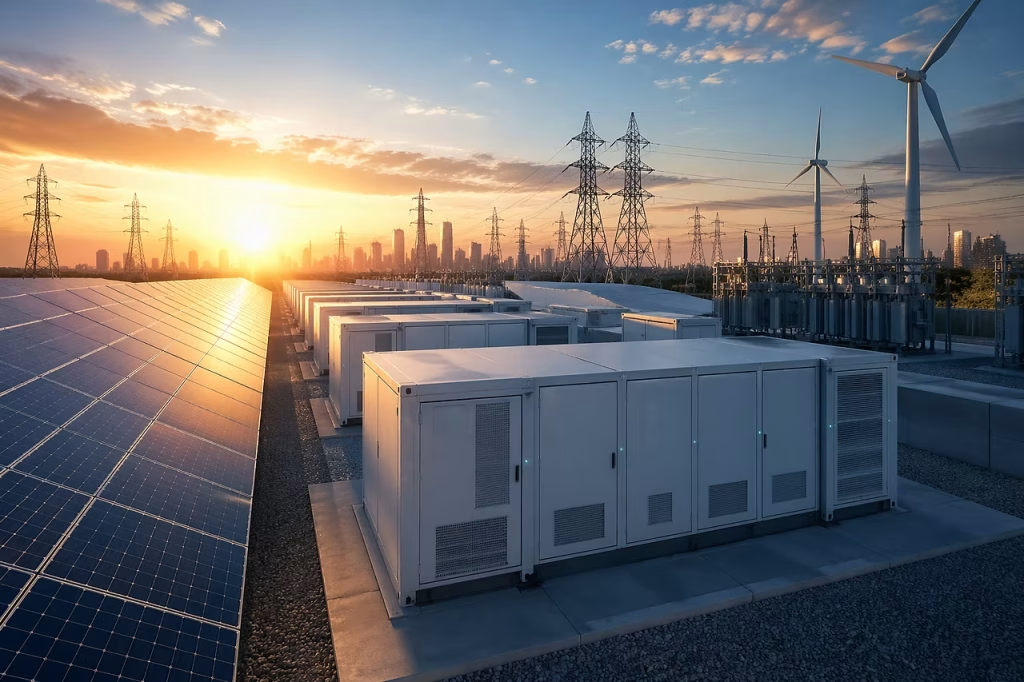
The global energy system is changing rapidly, and one of the most important elements of this transformation is energy storage. The development of renewable energy sources, particularly solar and wind power, is increasing the need for solutions that allow electricity not only to be generated but also stored and used when it is most needed. Battery Energy Storage Systems (BESS) are therefore moving from a relatively niche technology to an increasingly important part of the electricity infrastructure. The latest global market data clearly demonstrates this trend: according to InfoLink Consulting, global shipments of battery cells for energy storage reached 467.84 GWh in the first half of 2026, an increase of 94.8% compared with the same period in 2025. In the second quarter alone, shipments reached approximately 262 GWh, while InfoLink forecasts that total global demand for energy storage battery cells could exceed 1 TWh in 2026.
Why Is Energy Storage Becoming So Important?
The development of renewable energy sources creates not only new opportunities, but also a need for a more flexible electricity system. Solar power generation is highest during the day, while electricity consumption does not necessarily peak at the same time, whereas wind power generation depends on weather conditions. As the share of variable renewable energy sources increases, the ability to shift generated electricity over time becomes increasingly important. This is precisely what battery energy storage systems enable – electricity can be stored during periods when generation is high or prices are lower and then used later, when demand or prices are higher. BESS therefore becomes one of the tools that helps connect electricity generation with consumption and provides greater flexibility to the energy system.
For businesses, this can mean opportunities to optimise electricity costs, balance consumption patterns and make more efficient use of self-generated electricity. The combination of solar power and battery storage can be particularly relevant – electricity generated during the day can be stored and used later, increasing the share of energy consumed on-site. At the same time, larger-scale BESS projects can operate as standalone energy market assets, taking advantage of electricity price fluctuations or providing the flexibility required by the electricity system. As a result, battery storage should increasingly be viewed not simply as a technical piece of equipment, but as a potential investment asset whose value depends on how it is used.
The Global Market Is Growing and Becoming More Competitive
The rapid increase in demand is also changing the battery market itself. InfoLink data indicates that the combined market share of the ten largest battery manufacturers declined in the first half of 2026, pointing to increasing competition and the strengthening of new market players. At the same time, technology continues to develop – battery cell capacities are increasing, the relationship between energy density and cost is improving, and solutions for larger-scale energy storage projects are being developed. As the market expands and competition among manufacturers increases, businesses will have access to a wider range of technologies and suppliers. At the same time, this makes it increasingly important to carefully assess the overall project costs, battery lifecycle, efficiency, warranty conditions and potential revenue streams.
What Does This Mean for Latvian Businesses?
Interest in energy storage is gradually increasing in Latvia, driven by several factors – the development of renewable energy projects, electricity price fluctuations, growing corporate interest in energy independence and the need to use available grid infrastructure more efficiently. There is potential in several areas: for businesses with significant electricity consumption, batteries can become a tool for cost optimisation; for solar power plant owners, they can help increase the share of generated electricity consumed on-site; while larger-scale projects can be developed as standalone energy market assets. However, alongside technological considerations, the Latvian market will also require assessment of grid connection opportunities, network capacity, electricity market regulation, the intended operating model, financing options and investment returns. Therefore, the key question for a business is not simply “how much does a battery cost?”, but rather “what economic function will the battery serve and how will it generate a return?”.
Financing, Regulation and Investment Economics
The development of energy storage projects will increasingly be influenced by European Union and Latvian energy policy, as well as the availability of public funding. BESS projects can form part of broader corporate investments in energy efficiency, renewable energy or energy independence. However, not every project will automatically qualify for public funding. As with any investment project, its economic viability needs to be demonstrated, with a clear understanding of where revenues or savings will come from. This depends not only on the choice of technology, but also on the project’s business model, electricity price dynamics, operating scenario and regulatory environment.
It is precisely this combination of different factors that makes energy storage an interesting, but at the same time complex, investment area. The price of the battery itself does not determine whether a project will be profitable – the entire system needs to be assessed, including how it will be used over the long term.
Why Is It Important to Talk About This Now?
Global data shows a very clear trend – the energy storage market is experiencing rapid growth, and BESS is becoming an increasingly important component of the electricity system. In Latvia, the topic is also gradually making its way onto the agenda of businesses and investors. Recently, both potential clients and cooperation partners have expressed interest in battery and energy storage projects, indicating that more businesses are beginning to look beyond renewable energy generation alone and consider how generated electricity can be used and monetised more efficiently.
Energy storage is no longer simply a technology of the future. The global market is already growing at a very rapid pace, and for Latvian businesses the increasingly relevant question will not be whether batteries will become important, but rather how and where they can be used to create real economic value.
Source:
H1 2026: Global Energy Storage Rankings Reveal Surging Market Growth