The article was published on Delfi
The ban on a single pesticide ingredient would not be a significant event on its own, if it did not reveal a clash of interests across several sectors that will shape market dynamics in Latvia and throughout the European Union in the coming years.
The debate over pesticide bans in the EU has intensified in recent months, bringing into focus conflicting business interests — differing views on how to structure a free‑trade space that would encompass both the EU and the United States, differing approaches to managing health risks and applying the precautionary principle (including its use as a tool for restricting free trade), and differing opinions on how quickly unproven or partially proven threats to public health should reshape market shares in the economy and agricultural sectors.
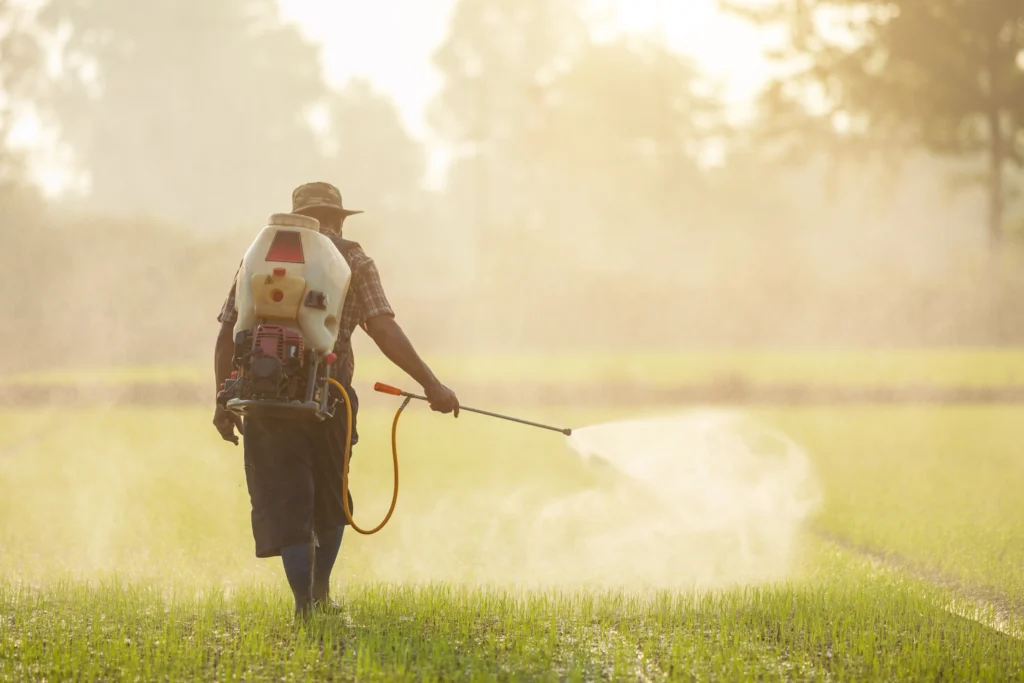
The discussion has centered on whether to allow or ban one specific active substance — glyphosate. Many people know it as an ingredient in the so‑called “Roundup,” produced by the US company Monsanto. The decision on extending its authorization was postponed in March and is now expected to be made in the coming weeks.
MARKET REDISTRIBUTION AND DISPUTES OVER HEALTH
The European Commission (EC) had promised already three years ago to present the criteria for evaluating endocrine‑disrupting chemical substances (including pesticides). Scientists have been requesting these criteria for more than a decade. Public health and environmental advocates in Sweden demanded a ban on such pesticides and took the EC to court for failing to develop the criteria within the mandated timeframe — and Sweden won the case. However, the court also noted that establishing the criteria does not automatically lead to a ban. If there are threats to plant health, the use of such chemicals may still be permitted.
The EU Health Commissioner has promised to define the criteria for these roughly 800 chemical substances by the summer. In France, he hopes to find a particularly strong ally, as the country tends to apply the so‑called precautionary principle, which allows a substance to be banned even when there is no clear evidence of a health risk. France is generally supportive of a glyphosate ban.
Despite the fact that the Organisation for Economic Co‑operation and Development (OECD) has, over the past fifteen years, defined testing methods to determine how chemicals affect endocrine processes, obtaining conclusive evidence remains methodologically complex, and reliable results are still lacking. International discussions continue to suffer from a shortage of scientifically proven data showing that pesticides, once applied to specific crops in specific fields and later used for food, have a measurable impact on the endocrine system.
Of course, those advocating for stricter pesticide controls can point to studies that support their position. The World Health Organization has assessed this substance as “probably carcinogenic.” Other research indicates that an increasing number of women are experiencing difficulties conceiving, and — perhaps — plant protection products could be contributing factors behind such global health challenges.
A study by the Heinrich Böll Foundation, which is closely aligned with Germany’s Green Party, concluded that glyphosate can be found in the bodies of the vast majority of the country’s population, at levels more than five times higher than the permissible limit for this substance in drinking water.
However, the European Food Safety Authority (EFSA) concluded that glyphosate is likely not carcinogenic. A similar assessment was made by Germany’s Federal Institute for Risk Assessment. Germany supports the continued use of glyphosate.
Pesticides are essential for industrial agriculture. Since the free‑trade agreement between the United States and the European Union will also cover the agriculture and food sectors, major players are strategically fighting for advantageous market access — and a pesticide ban provides a convenient justification.
UNDERSTANDING OF RISK WILL INFLUENCE THE SCALE OF EU–US FREE TRADE
The question of whether the EU’s high food‑safety standards or economic advantage should take priority also forms part of the broader debate surrounding pesticides. Last autumn, the EU held a public consultation on this issue, during which the United States emphasized that introducing new restrictions based on risk‑assessment criteria hampers trade more than necessary — especially when the alleged threat has not been scientifically proven. The US also argued that creating new barriers without evidence of actual risk would hinder American agricultural exports to the EU. France took the opposite position — safety must come first, and only then economic benefit. The French National Institute for Agricultural Research (INRA) has concluded that the financial gains from using pesticides are about 30% lower than the external costs they create. France will not support an EU agreement with the United States if it lowers environmental or food‑safety standards. One can only speculate how much of this resistance is driven by concern over public health and how much by concern over France’s own agricultural sector.
One of the goals of the Transatlantic Trade and Investment Partnership is to reduce barriers to the free movement of goods — which would mean that, without scientifically proven health risks, restrictions would have no basis.
The Latvian organization “Green Liberty” is calling for restrictions on pesticide use and proposes introducing a tax on them — a measure that has been rejected by the responsible Ministry of Agriculture. The EU, most likely, is going to allow their use, perhaps with certain limitations.
If the United States gains the ability to export its industrial‑agriculture products to the EU, competition in this sector will intensify — and one can only hope that Latvia’s non‑organic agricultural producers will withstand it. The pesticide debate once again highlights the increasingly strong market outlook for organic farming in Latvia.