
Armands Gūtmanis, head of the consulting firm Amber Advisory.
In July, the European Commission published proposals—the Electrification Action Plan and proposals to improve the Emissions Trading System (ETS). Formally, these are two separate documents, but together they signal a shift in policy. The European Commission is striving to strike a balance between achieving climate and emissions reduction goals and maintaining the competitiveness of European industry.
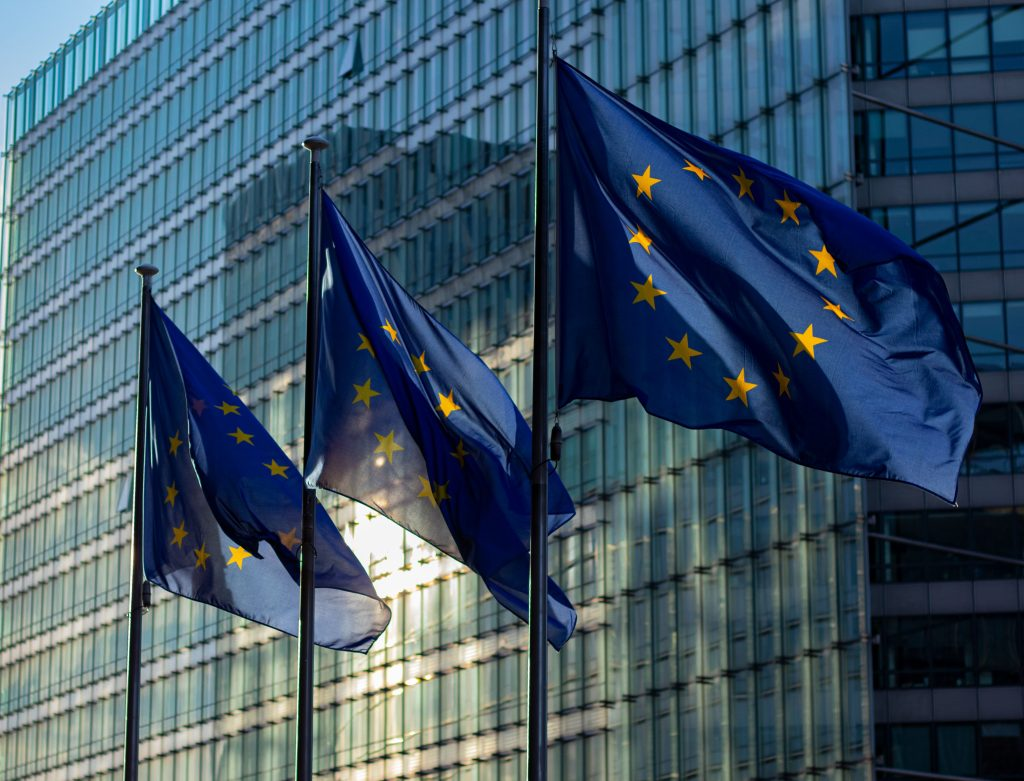
Photo by Marco: Marco – Photography
The European Union has adopted dozens of directives, regulations, and other legislative acts that form the basis of European climate policy and emissions reduction targets. This phase is drawing to a close. The European Commission is now focusing on the implementation of already approved commitments and on how to help businesses put these decisions into practice.
This is reflected both in the European Commission’s new policy documents and in discussions on the European Union’s next multiannual budget. Increasing importance is being placed on attracting investment, adopting new technologies, electrification, developing the hydrogen economy, modernizing power grids, and decarbonizing energy-intensive industries. This does not mean abandoning the Green Deal. The goal of climate neutrality by 2050 remains in place, as does the plan to reduce greenhouse gas emissions by 90% by 2040 compared to 1990 levels.
From the Green Deal to the Clean Industrial Deal
We are replacing the term “European Green Deal” with “Clean Industrial Deal.” This reflects a shift in European economic thinking, which is the result of lobbying battles and market realignment.
While the Green Deal’s mission was to set ambitious climate goals and create regulations to reduce emissions, the main issue now is quite different—how to achieve these goals without compromising the competitiveness of European industry in the global market.
Events in recent years have only reinforced this necessity. The energy crisis, high electricity prices, geopolitical instability, growing competition from the U.S. and China, and the need to strengthen Europe’s defense capabilities have created a new economic landscape. The European Commission recognizes that climate policy cannot exist in isolation from industrial policy and competitiveness. Symbolically speaking, it is forced to shift from the path of ecological radicalism onto the highway of economic viability. Emissions reduction policies are becoming increasingly intertwined with investment, innovation, electrification, energy security, and industrial modernization.
Why are the discussions becoming increasingly heated?
It is precisely at this stage that it becomes clear why the climate policy debates in Brussels have become particularly intense in recent months.
On the one hand, there are companies that have invested significantly in recent years in emissions reduction, energy efficiency, and new technologies, based on previously adopted European Union decisions. It is important for these companies that climate policy instruments remain sufficiently stable and predictable, as this is the only way for them to recoup their investments and remain competitive.
Conversely, another group of companies points out that the current ambitious emission reduction targets place an excessive burden on them and undermine Europe’s competitiveness in the global market. These companies are calling for a reduction in the administrative burden, an extension of transition periods, and a reduction in the costs generated by climate policy.
Paradoxically, both sides use the same argument—competitiveness. However, each understands it differently. Some believe that competitiveness is threatened by a too-rapid retreat from previously established climate policy instruments, as this would penalize companies that have already invested in modern technologies. Others emphasize that current costs are too high and hinder the development of European industry.
The events of recent years, marked by dramatic disruptions in oil and gas supplies, clearly demonstrate that Europe has no alternative but to invest rapidly in energy independence and, consequently, in lower-emission resources.
The comprehensive reform of the European Commission consists of several elements
For twenty years now, the ETS has been the European Union’s primary economic instrument for reducing emissions. The system works on a simple principle: a total allowable amount of emissions is set, which gradually decreases, thereby reducing the number of emission allowances available on the market. As the number of allowances decreases, their price rises, making it more cost-effective for companies to invest in lower-emission technologies.
ETS Reform: What Should the Price of CO₂ Be?
First, the price of CO₂. In recent years, the price of emission allowances has fluctuated around 80 euros per metric ton of CO₂. Some companies and industries believe that such a high price significantly increases production costs and reduces Europe’s competitiveness in global markets. On the other hand, companies that have already invested in decarbonization in recent years point to the opposite risk: if the price of emissions is artificially lowered and the impact of the ETS is weakened, those investments could lose their economic justification.
This clearly illustrates how significantly the discussion itself has changed in recent years. Opinions are no longer shaped by a simple “for” or “against” stance on climate policy. Instead, companies that have (or have not) made different investment decisions at different times find themselves on opposing sides.
Free Emission Quotas – How Long Should the Transition Period Be?
Second, the issue of the volume of free emission allowances for energy-intensive sectors.
Until now, the European Union has allocated a portion of emission allowances free of charge to companies operating in sectors particularly exposed to international competition, such as metal processing, cement production, the chemical industry, and other energy-intensive sectors. At the same time, it had already been planned to gradually reduce this support and eventually phase it out entirely.
Now, the European Commission is proposing to make the transition period more flexible, while more closely linking the allocation of free allowances to companies’ actual investments in decarbonization.
Opinions are divided on this issue as well. Some believe that European industry needs more time to adapt, while others warn that maintaining support for too long could weaken the incentive to invest in new technologies and once again put those who have already invested in an absurd situation.
How should ETS revenues be used?
Third, a key issue is the use of revenues generated from emissions trading.
To date, Member States have taken different approaches. Some have allocated a portion of these revenues to the general government budget, while others have placed greater emphasis on emissions and energy projects.
The European Commission maintains that these funds should become one of the main sources of financing for industrial modernization. This would mean greater support for the decarbonization of energy-intensive sectors, the adoption of new technologies, energy efficiency projects, and other investments that would help companies reduce emissions.
Electrification – From Costs to Opportunities
Fourth, while the ETS operates primarily on the principle of “polluting becomes more expensive,” the Electrification Action Plan introduces a second approach—making clean alternatives more economically attractive, that is, cheaper.
The European Commission notes that more than 70% of the electricity generated in Europe already comes from low-emission sources; however, electricity still accounts for only about a quarter of final energy consumption. By 2040, this share is expected to nearly double.
Fifth, this means investing in the modernization of power grids, electricity storage solutions, charging infrastructure, heat pumps, the electrification of industry, and a more flexible electricity market. At the same time, hydrogen technologies are also becoming increasingly important, particularly in sectors that are difficult to electrify.
New Market Instruments – Carbon and Nature Credits
Sixth, alongside the ETS reform, the European Commission is also developing new market-based instruments. One of these is the carbon credit system. In July, the EC approved methodologies for calculating carbon credits in forestry and agriculture. By using certified methodologies, the forestry and agriculture sectors will be able to demonstrate carbon sequestration or emission reductions and receive compensation for them. This will open up new opportunities not only for achieving climate goals but also as a source of additional income for landowners and farmers.
Seventh, the concept of Nature Credits is still in an even earlier stage of development. Its basic idea is similar—to place an economic value on the conservation of biodiversity, ecosystems, and natural capital. Although this system is still in its infancy, European Commission documents refer to it as one of the future instruments that will complement climate and sustainability policies with a broader perspective on the responsible management of natural resources.
What does this mean for Latvia?
On the one hand, our country boasts relatively low levels of greenhouse gas emissions from electricity generation. The Daugava hydroelectric power plants, as well as the growing share of wind and solar energy, mean that Latvia’s electricity system is already one of the lowest-emission systems in Europe. In theory, this creates favorable conditions for the development of electrification.
In practice, however, the situation is more complex. For several years, both businesses and households have pointed to high electricity prices, transmission and distribution tariffs, an insufficient pace of infrastructure development, and the need for investment. If using electricity is not more economically attractive than fossil fuels, the transition to electrification proceeds significantly more slowly.
Eighth, the European Commission is now also working to address this very issue. The electrification plan aims not only to increase the use of electricity but also to make it more accessible and competitive. This is a key focus for Latvia as well, as economically sound electrification can become a real tool for development.
Climate policy is becoming more pragmatic
However, the most significant changes for Latvian companies may not stem solely from Brussels’ regulations. They come from the market itself.
Exporting companies are facing a situation where foreign customers want not only a high-quality product at a competitive price, but also clear information about its carbon footprint—with a trend toward reduction. In many industries, this is already becoming a prerequisite for cooperation.
Companies are seeking solutions to reduce emissions, modernize production, or secure funding for new technologies—not because regulations require it, but because their customers expect it.
We can view European climate policy merely as a new set of requirements, or we can use it as an opportunity to modernize industry, strengthen our export capacity, and attract investment.
Today, the most important question is no longer whether to adapt to climate change, but rather how successfully we will be able to capitalize on the changes already taking place in the European economy.